
How to build your own health ring brand: an OEM sourcing guide
ECG, SpO2, blood pressure, sleep tracking — the health ring market is growing. Here is how to go from concept to product with OEM manufacturing, without building a factory or writing firmware.
Health rings are one of the fastest-growing wearable categories. ECG, SpO2, blood pressure, sleep tracking — features once exclusive to hospital equipment now fit on a finger. The market wants health data without a screen, and distributors need differentiated products. OEM manufacturing lets you launch your own health ring brand without building a factory or writing firmware.
Here's what you can customize: which health features to include (ECG, SpO2, blood pressure, temperature, sleep, remote care), how the ring looks (stainless steel, epoxy resin, 8mm wide, ~5.0g), and how it's packaged (your brand, your box, your manual). You choose the specs. We manufacture. You own your market.
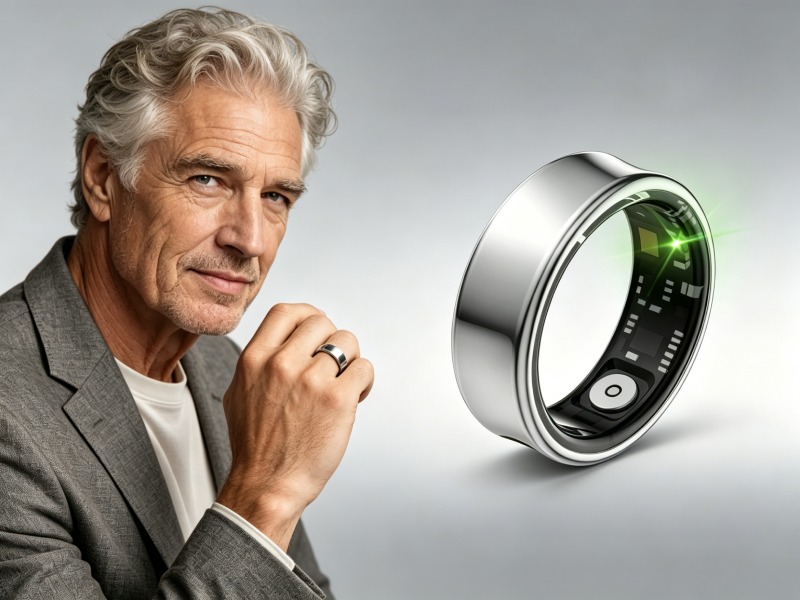
What you can customize
OEM means you choose what goes in, what goes on, and how it's sold:
- Features: ECG, SpO2, blood pressure, skin temperature, sleep tracking, remote care sharing. Enable only what your market needs.
- Hardware: Nordic nRF52832 chipset, Goodix 3228T ECG + PPG sensors, STK8321 accelerometer, Bluetooth BLE 5.3. IP68 waterproof. 18mAh battery, 4-6 day active use / 10-15 days standby. Magnetic charging.
- Materials: 304 stainless steel outer body, epoxy resin main body. 3.6–4.2g (varies by ring size). Anti-scratch matte finish.
- Branding: Your logo, your packaging, your manual. HealthWear app in 28 languages.
How the OEM process works
Typical timeline from first contact to production: specification (1-2 weeks), sampling (2-4 weeks), pre-production with branding (4-6 weeks), mass production (6-8 weeks). Start with evaluation units, lock your configuration, then scale at your pace.
How do you handle ring sizing for a facility-wide deployment?
We provide a complimentary sizing kit with evaluation orders. Each kit contains ring sizers in all available sizes (US 5-13). Staff measure each resident's finger — the process takes under one minute per resident. Rings are then ordered in the correct sizes. For replacements or new admissions, individual rings can be reordered in any size.
Is the health data HIPAA-compliant?
Yes. All data is encrypted at rest (AES-256) and in transit (TLS 1.3). We provide a Business Associate Agreement (BAA) to all facility clients. Role-based access controls ensure that only authorized staff can view resident health data. The dashboard maintains an audit log of all data access.